
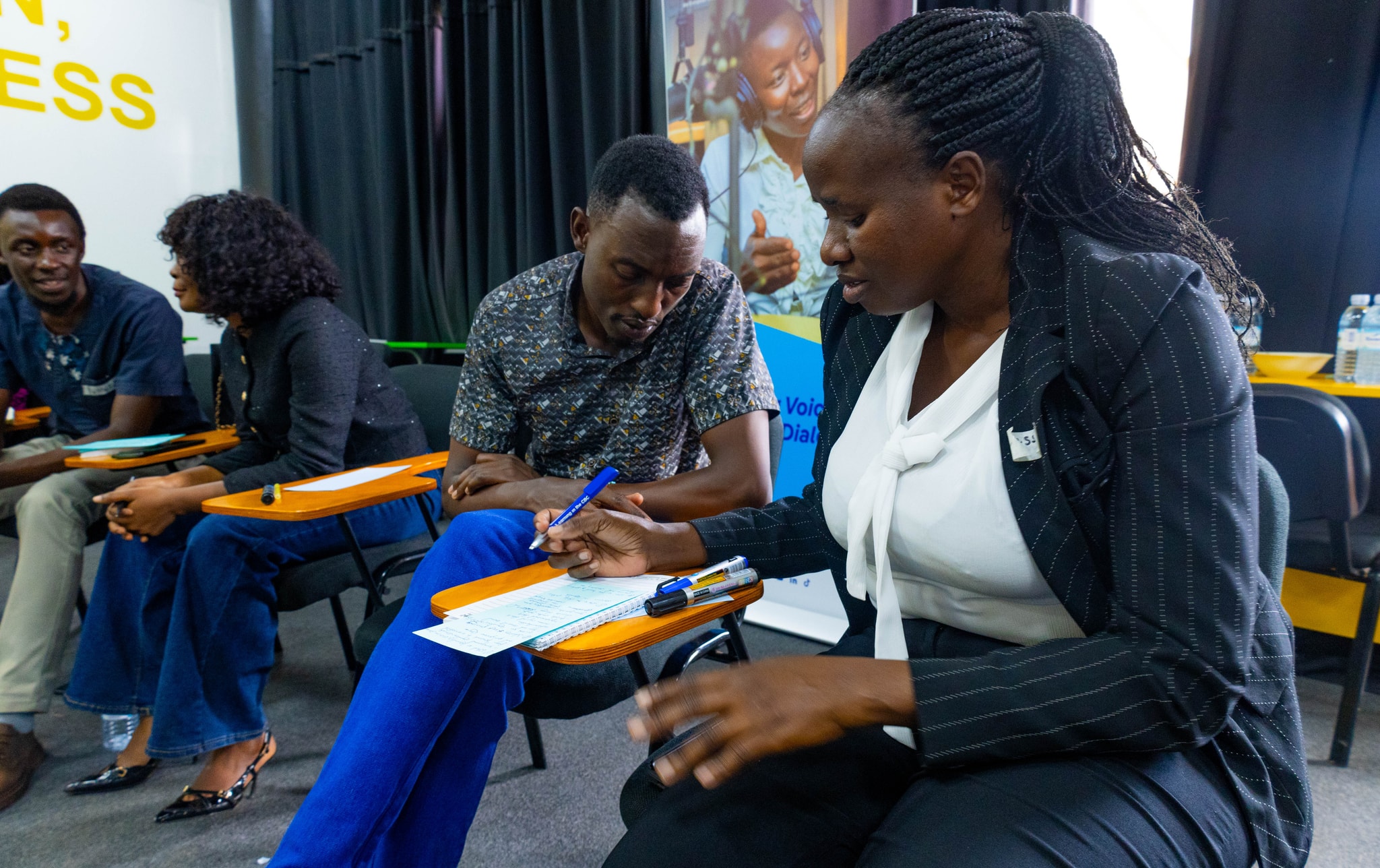
A group of urban journalists has completed a four-day intensive training aimed at strengthening their capacity to report on public accountability and transparency (PAT) issues in Uganda, as part of a Amplifying Public Accountability project implemented by the Media Challenge Initiative with support from the European Union and DW Akademie.
The training, held at MCI Media Hub, brought together journalists for sessions designed to deepen their understanding of governance structures and equip them with practical tools for reporting on public service delivery and accountability matters.
One of the key sessions focused on the roles and responsibilities of leaders at every level of government, from local council chairpersons to the President. The facilitator Leonard Imanishimwe told participants that understanding these mandates is critical for journalists seeking to hold leaders accountable and ask informed questions during reporting.
"Understanding the responsibilities of every leader is key in holding them accountable and posing appropriate questions," Imanishimwe told the journalists during the session.
Participants also took part in interactive sessions and group activities examining the mandates of Uganda's key accountability institutions, including the Office of the Auditor General, the Attorney General, the Anti-Corruption Court, and the State House Anti-Corruption Unit.
The training further introduced urban journalists to the Iceberg Model, a reporting framework that encourages journalists to look beyond surface-level stories. Antonio Kisembo, an award-winning journalist and our Chief Operations Officer, who facilitated the session, urged participants to examine the systems, structures, policies, trends and patterns that underlie public accountability issues, rather than focusing only on isolated incidents.
The urban journalists also received guidance on how to pitch story ideas effectively, in a session led by Antonio Kisembo. He outlined a structured approach involving positioning the issue, providing background and rationale, identifying potential story angles, and outlining a reporting strategy.
Speaking after the training, one of the journalists described the experience as transformative, noting that it had revealed gaps in their previous understanding of public officials' roles and provided new tools for more impactful reporting.
"This program has equipped me with the potential to be an improved journalist and able to lobby for public transparency and accountability in Uganda," Joyce Namugambe said, adding that the training had also emphasised the importance of collaboration among journalists in producing quality accountability journalism.
Organisers of the fellowship say the initiative is part of broader efforts to strengthen the media's role in promoting good governance, exposing corruption, abuse of power, and human rights violations across Uganda.